
Peptide
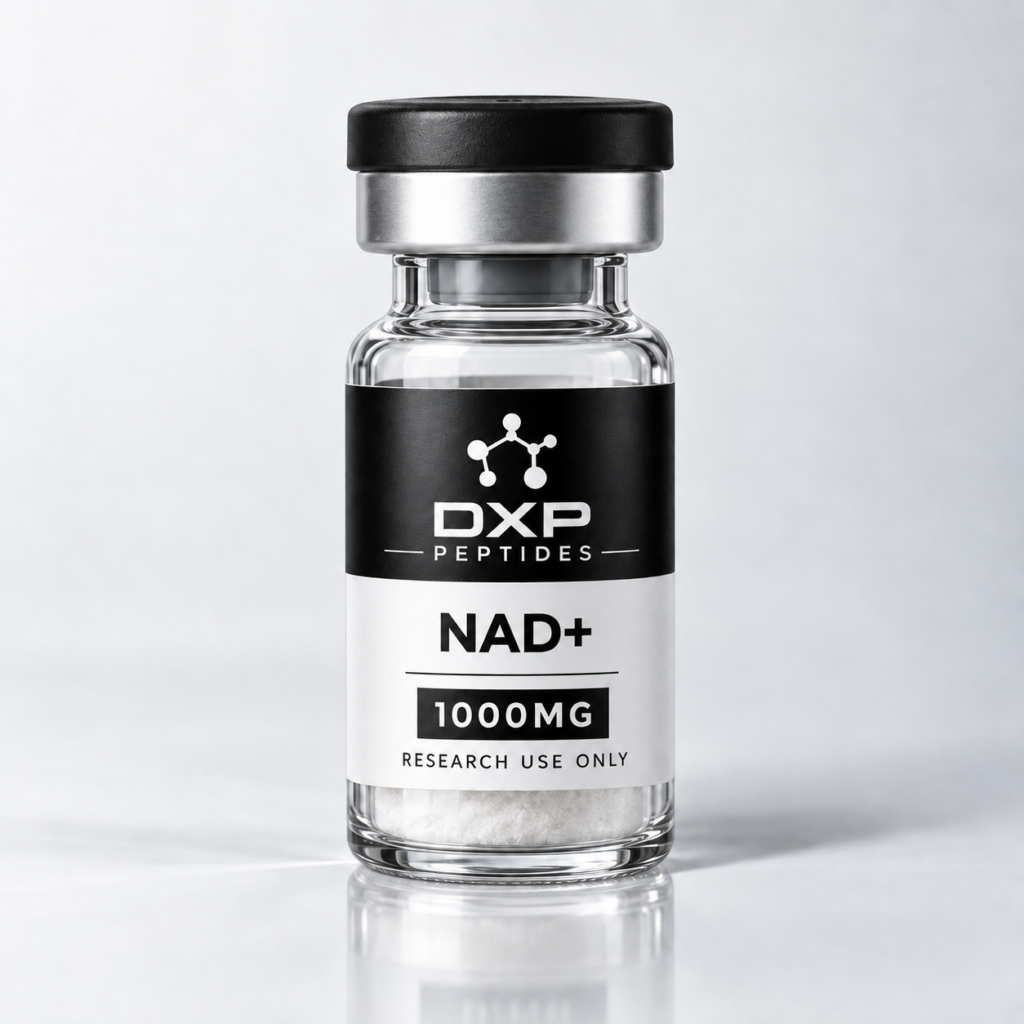
NAD+
NAD+ (Nicotinamide Adenine Dinucleotide) is a naturally occurring cellular coenzyme studied in laboratory research involving energy metabolism, mitochondrial function, redox balance, DNA-repair pathways and cellular ageing.
For research purposes only. Not for human consumption.
Research Use Only — Not For Human Consumption
Product Description
NAD+ (Nicotinamide Adenine Dinucleotide) is an essential coenzyme found throughout living cells. Although often grouped commercially alongside research peptides, NAD+ is not a peptide. It is a pyridine nucleotide cofactor with central roles in cellular metabolism and biochemical signalling.
NAD+ participates in oxidation-reduction reactions that are fundamental to cellular energy production. It acts as an electron carrier in metabolic pathways and is closely associated with mitochondrial respiration and ATP production.
Beyond its metabolic role, NAD+ also serves as a substrate for several enzyme families involved in cellular regulation, including sirtuins and poly(ADP-ribose) polymerases (PARPs). These pathways are widely studied in relation to DNA repair, cellular stress responses, gene regulation and ageing biology.
NAD+ may therefore be of interest to researchers studying:
- Cellular energy metabolism
- Mitochondrial function
- Oxidative phosphorylation
- Cellular redox balance
- Sirtuin-associated signalling
- PARP and DNA-repair pathways
- Cellular stress responses
- Ageing and metabolic biology
Research into strategies intended to alter cellular NAD+ availability is ongoing. While preclinical studies have produced substantial mechanistic data, human studies of NAD+-boosting compounds have reported mixed or endpoint-specific results, and direct NAD+ administration remains comparatively under-characterised.
For laboratory and research purposes only. Not for human consumption. Not intended to diagnose, treat, cure or prevent any disease.