
Peptide
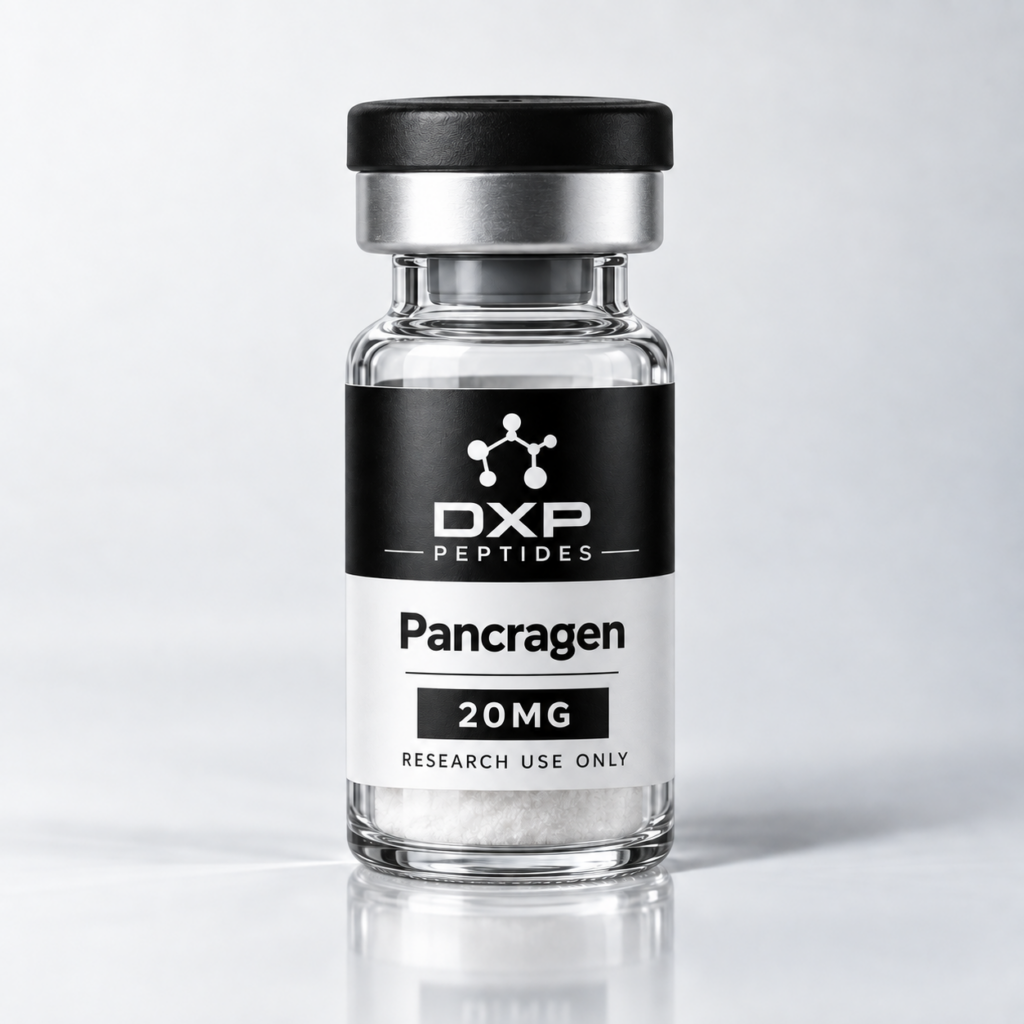
Pancragen
Pancragen (KEDW) is a synthetic tetrapeptide composed of lysine, glutamic acid, aspartic acid and tryptophan. It is studied in laboratory research involving pancreatic-cell biology, cellular differentiation, ageing and glucose-regulation pathways.
For research purposes only. Not for human consumption
Research Use Only — Not For Human Consumption
Product Description
Pancragen (Lys-Glu-Asp-Trp / KEDW) is a synthetic short-chain tetrapeptide investigated as part of research into tissue-specific peptide bioregulation and pancreatic-cell function.
Laboratory studies have examined Pancragen in cultured pancreatic cells, including its relationship with cellular differentiation and the expression of differentiation-associated markers such as CXCL12 and HOXA3. One published study reported tissue-specific effects of KEDW in ageing pancreatic cell cultures.
Preclinical research has also explored Pancragen in relation to pancreatic endocrine function and glucose-regulation pathways. Studies in aged rhesus monkeys examined changes in glucose, insulin and C-peptide responses following experimental exposure to the peptide. These findings remain animal data and should not be interpreted as demonstrating equivalent effects in humans.
Pancragen may therefore be of interest to researchers studying:
- Pancreatic-cell biology
- Cellular differentiation
- Age-related cellular changes
- Glucose-regulation pathways
- Insulin and C-peptide signalling
- Tissue-specific peptide activity
- Short-chain peptide bioregulators
The available research on Pancragen is limited and predominantly preclinical, and its safety or efficacy for human use has not been established.
For laboratory and research purposes only. Not for human consumption. Not intended to diagnose, treat, cure or prevent any disease.