
Mitochondrial Function & Cellular Energy
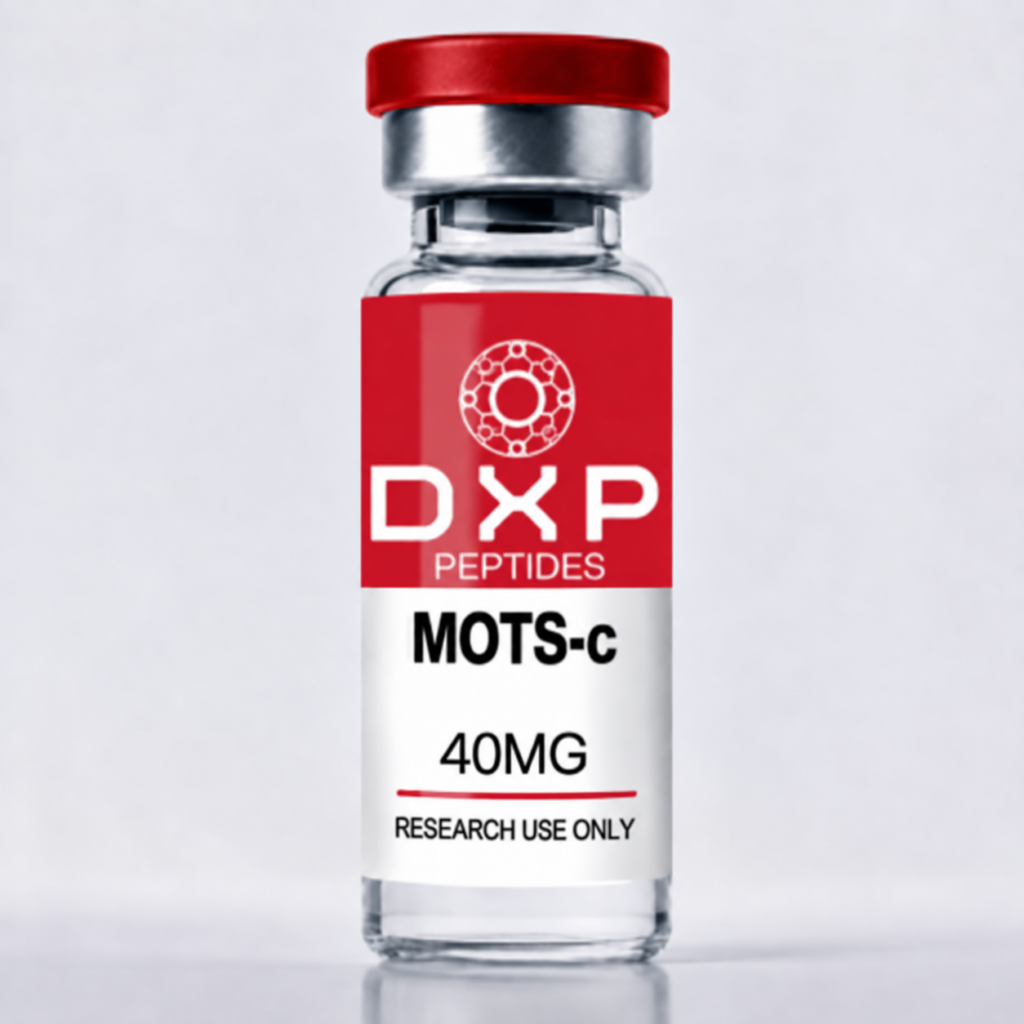
MOTS-c
Mitochondrial-Derived Regulatory Peptide (MDP)
Research Use Only — Not For Human Consumption
Product Description
Overview
MOTS-c (Mitochondrial ORF of the 12S rRNA-c) is a 16-amino-acid regulatory peptide uniquely encoded within the mitochondrial genome rather than the nuclear DNA. Discovered within the last decade, it represents a significant shift in our understanding of how mitochondria function as signaling organelles.
In research settings, MOTS-c is recognized as a primary mitochondrial signaling molecule that facilitates nuclear–mitochondrial communication. It is extensively studied for its ability to activate the AMPK (AMP-activated protein kinase) pathway, which serves as a master regulator of energy metabolism. By promoting fatty acid oxidation and glucose uptake, MOTS-c is a vital tool for investigating metabolic homeostasis, insulin sensitivity, and the physiological response to exercise and aging.
Key Research Applications
MOTS-c is a cornerstone for studies focusing on systemic metabolic health and mitochondrial bioenergetics:
- AMPK Signaling: Investigating the activation of energy-sensing pathways and downstream metabolic adaptations.
- Metabolic Homeostasis: Modeling glucose uptake, fatty acid oxidation, and insulin sensitivity in cellular systems.
- Exercise Physiology: Researching the enhancement of exercise capacity and muscle function through mitochondrial signaling.
- Longevity & Aging: Analysis of the correlation between MOTS-c levels and healthy aging markers, as well as its role in counteracting metabolic decline.
- Stress Response: Investigating nuclear–mitochondrial communication pathways during states of metabolic stress.
Additional Details
- Sequence Length: 16 Amino Acids
- Peptide Type: Mitochondrial-derived peptide (MDP)
Handling & Reconstitution
To maintain the integrity of this specialized mitochondrial-derived peptide:
- Reconstitution: Use sterile water or an appropriate buffered aqueous solution.
- Technique: This peptide is hygroscopic; handle under dry conditions. Gently swirl until fully dissolved. Avoid vigorous agitation, which may lead to peptide degradation.
- Stability: Immediately aliquot reconstituted solutions into single-use portions and store at –20°C. This minimizes repeated freeze-thaw cycles that can compromise research results.
- Sterilization: If necessary for in-vitro assays, filter sterilize using a 0.22 µm membrane.
Important Safety Information
For Research Use Only. This product is a synthetic representation of a mitochondrial-derived peptide intended strictly for laboratory and in-vitro research. It is not for human or veterinary use, nor is it intended for diagnostic, therapeutic, or clinical applications. Researchers should be aware that experimental outcomes are highly dependent on the metabolic state and biological model system utilized.
References
- Kim, K. H., et al. (2017). Mitochondrial-derived peptides as novel regulators of metabolism. Journal of Physiology, 595(21), 6613-6621. PubMed
- Lee, C., et al. (2015). The mitochondrial-derived peptide MOTS-c promotes metabolic homeostasis and reduces obesity and insulin resistance. Cell Metabolism, 21(3), 443-454. PubMed
- Reynolds, J. C., et al. (2021). MOTS-c is an exercise-induced mitochondrial-encoded regulator of age-dependent physical decline and muscle homeostasis. Nature Communications, 12(1), 314. Nature
- Immune Modulation & Defense
- Peptide
- Consolidated Research Description
Specifications
| Molecular Formula | C101H152N28O22S2 |
|---|---|
| Molecular Weight | ~2174.6 g/mol |
| Purity | ≥99% (HPLC Tested) |
| Storage | Store desiccated at –20°C (Protect from light) |
| SKU | DEXA-MOTS-C |