
Peptide
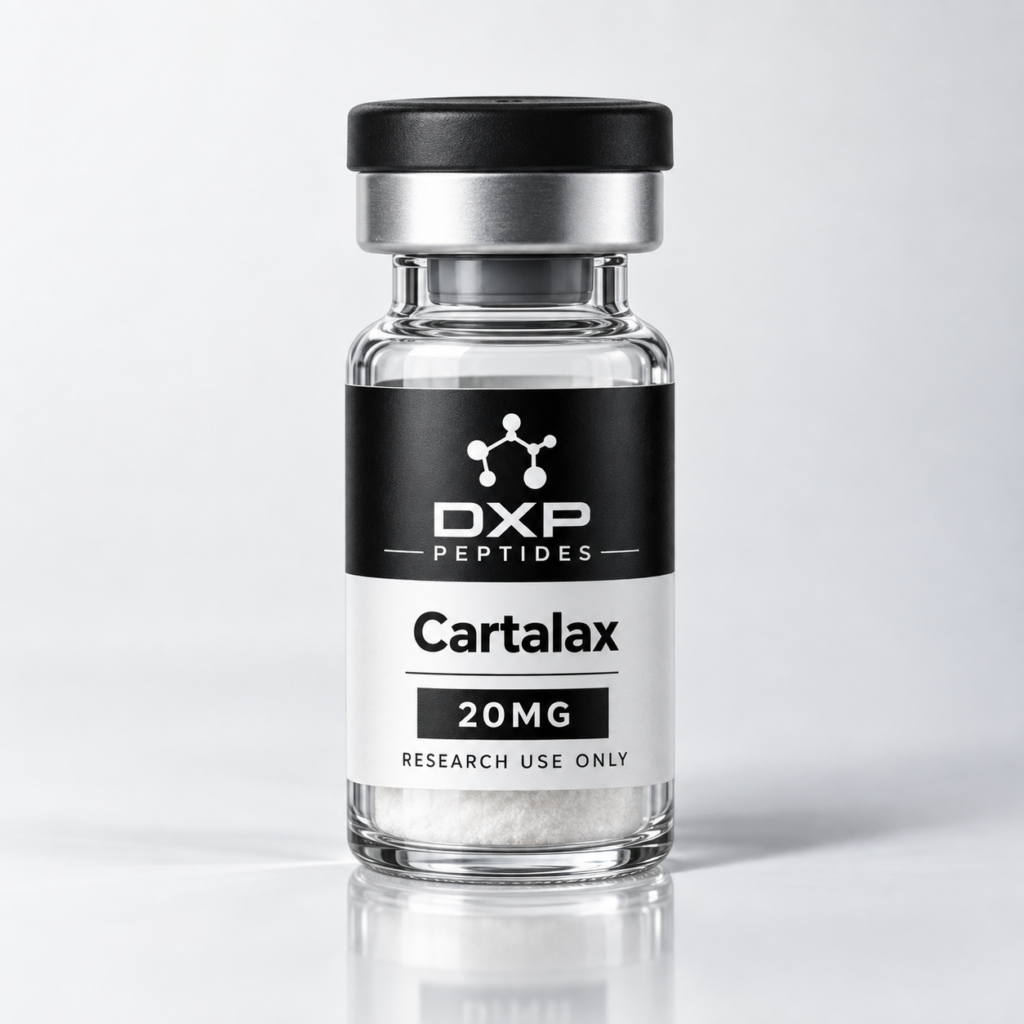
Cartalax
Cartalax (AED) is a synthetic tripeptide composed of alanine, glutamic acid and aspartic acid. It is studied in laboratory research examining cartilage biology, cellular ageing and the regulation of markers associated with chondrogenic differentiation.
For research purposes only. Not for human consumption
Research Use Only — Not For Human Consumption
Product Description
Cartalax (Ala-Glu-Asp / AED) is a synthetic short-chain peptide consisting of three amino acids: alanine, glutamic acid and aspartic acid. It belongs to a group of compounds commonly referred to as short peptide bioregulators and has been investigated primarily within preclinical and laboratory research.
Research involving AED has explored its interaction with cellular processes associated with cartilage biology, cellular ageing and chondrogenic differentiation. Experimental studies have examined changes in the expression of markers involved in cartilage extracellular-matrix formation and the differentiation of mesenchymal stem cells toward cartilage-associated cell types.
Cartalax is therefore of interest to researchers studying areas including:
- Cartilage and connective-tissue biology
- Chondrogenic differentiation
- Cellular ageing and senescence
- Extracellular-matrix signalling
- Peptide-mediated gene-expression research
The available evidence for Cartalax remains limited and largely preclinical, and findings from laboratory models should not be interpreted as demonstrating effects in humans.
For laboratory and research purposes only. Not for human consumption. Not intended to diagnose, treat, cure or prevent any disease.