
Peptide
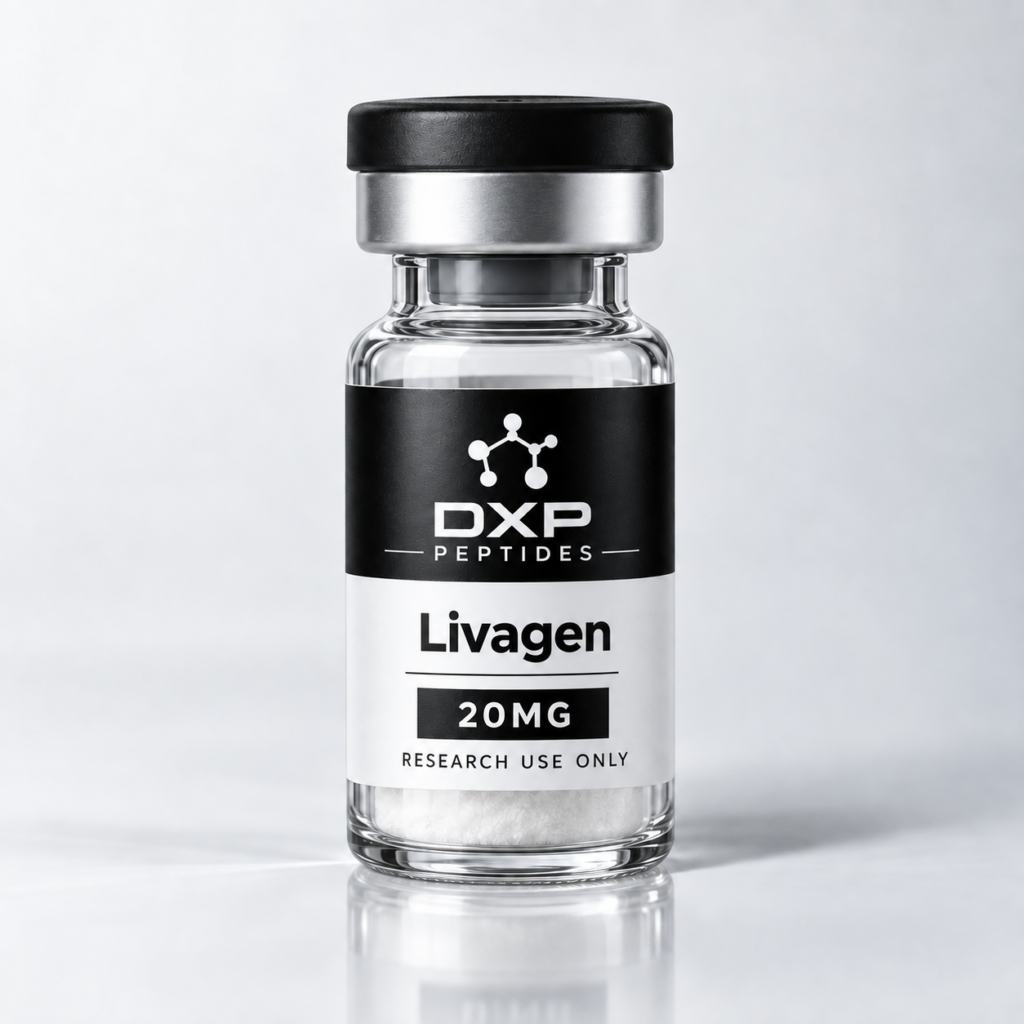
Livagen
Livagen (KEDA) is a synthetic tetrapeptide composed of lysine, glutamic acid, aspartic acid and alanine. It is studied in laboratory research involving liver-cell biology, protein synthesis, chromatin organisation and age-related cellular processes.
For research purposes only. Not for human consumption.
Research Use Only — Not For Human Consumption
Product Description
Livagen (Lys-Glu-Asp-Ala / KEDA) is a synthetic short-chain tetrapeptide developed within the class of compounds commonly described as peptide bioregulators.
Laboratory research has examined Livagen in relation to hepatic cellular function and protein synthesis. In cultured rat hepatocytes, KEDA was reported to influence protein-synthesis activity, with effects investigated across cells from animals of different ages.
Other experimental work has explored Livagen’s interaction with cellular regulatory and enzyme pathways. In-vitro studies have examined its effects on chromatin organisation, ribosomal-gene activity and enkephalin-degrading enzymes in human serum. One study reported inhibition of enkephalin-degrading enzymes without detectable interaction with the tested μ- or δ-opioid receptors.
Livagen may therefore be of interest to researchers studying:
- Liver and hepatocyte biology
- Cellular protein synthesis
- Peptide-mediated cellular regulation
- Chromatin organisation
- Ribosomal-gene activity
- Age-related cellular changes
- Enzyme–peptide interactions
- Short-chain peptide bioregulators
The available evidence for Livagen remains limited and predominantly preclinical or in-vitro. Findings from experimental models should not be interpreted as establishing safety, efficacy or therapeutic effects in humans.
For laboratory and research purposes only. Not for human consumption. Not intended to diagnose, treat, cure or prevent any disease.